Comments, relating to the topic, are welcome, add a great deal to a blog, but must be in English, with no profanity, hate-filled insults, or links (unless pre-approved) To contact me with questions: rainnnn7@hotmail.com.


Wednesday, February 27, 2019

Diane Widler Wenzel : Native Hawaiian Weaving with Hulali Jewell


Hulali assisted me by tying off ten locked ends
 to keep them in place while working on the other side.
This is the stage where a flat weaving
is made to have four corners.


The last baskets I made were during my early teens. For several years I made paper Easter baskets for four neighbor kids. The baskets were held together with stapples. They were decorated with paper flowers and animals, filled with decorated hard boiled eggs. While vacationing in Hawaii, I learned of the basket making and woven bracelet class from a park ranger and immediately I wanted to experience and appreciate the pleasure of touching natural fiber in the process of creating. I wanted to try something new.
         For the price of the materials, Huilsli teaches traditional Hawaiian weaving classes every Friday and Saturday morning at the headquarters of Kaloko Honokohau National Heritage Park on the Kona Coast in West Hawaii. Preregistration is necessary so Hulali can make kits for each student. For reservations call 329-6881.
           Materials from nature are rewarding to my senses. I am often repulsed by perfect manufactured slick plastics. The aesthetic richness and soothing rhythm of the weaving craft permeating every aspect of the lives of my weaver friends. Their immersion and connection to the natural world is an art form transforming the quality of their lives. Even their values!
       I foresee a time when more and more people in our consumerist American culture will again value working with natural materials over the convenience of plastic containers and toys.  The process of crafting natural materials will tap into our creative selves satisfying a basic need to express ourselves. The bonus will be a more complete and satisfying life styles like my utopian fantasy of Hawaiian culture. I imagine the Hawaiians and their children together. Adults sitting and weaving while children sometimes looking on absorbing the art of living or the children imaginatively entertaining themselves now and then being entertained with their elders' stories and songs in the rhythm of their weaving.
      Neither on line nor at the Kona Bay Books was an adequate book to prepare me. A teacher like Hulali is essential to demonstrate just how to distinguish the right side from the back side of the pandanus leaf, just how much mist is required to keep the fiber pliable and not soggy limp, and just how much to pinch or tug. There is no substitute for Hulali's vigilance to catch mistakes early enough to correct them easily. As a beginner I held the basket awkwardly making weaving difficult. I tried to hold the basket as she suggested. Of course the smaller the class, the better she can assist. When I was wove a basket, I was the only student.
       From Hulali's class I received a greater appreciation of an under appreciated vehicle for creative expression. What I enjoyed most was the feel of the leaves. The right side of the leaf has a natural sheen. The back has visible, slightly hydrated veins strengthening the basket with a nice supple body as though the leaves are alive.  The fiber properties must be respected but with love and care the leaves are amazingly forgiving allowing finesse.
 

     Like in making pots the basket fibers are gleaned from the earth, aged, hydrated to the right consistency, coaxed to being pliable with a bamboo straight edge like the wooden potter's rib.  Both materials, leaf or clay, are measured exactly, cut and arranged precisely, tightly centered to make a vessel. Both are built up from the bottom. Both have a mind to spread outwards as the sides build upwards. Clay and natural fiber both require a feel of how much to pull inwards until the top of the vessel is reached.  Turning the lip is critical and difficult. The shaping of the body is the most rewarding. The final stage included pushing in and pulling out the body in both. Love was the pinching pushing and pulling down the lip to make a nice tight edge.  The diagonal spiraling directions of the plated weave allows for shaping reminding me of the spiraling movement of clay on a potter's wheel. The dampened slightly misted leaves slip against one another just as the molecules of clay do so in shaping. When pulling up the wall and later shaping a pot on a potters' wheel, the water makes the vessel pliable and strong holding their shape.
       The properties of the materials of both also reminds me of the way clay can imitate fabric. In both wheel thrown and handbuilt clay the softness of the natural convex shape is like the basket's body. The tendency of both clay and pandanus is to flare like a trumpet at the lip. Also like clay the woven pandanus fiber leaves behind a story of every touch. In my inxperience the story is one of struggle.

In both my clay slab handbuilt and my plated pandanus basket
the materials want to push outward especially around the lip.
They both show the touch of the maker revealing my struggles.

The walls of the basket could be shaped into greater angularity.
I see eight triangles not so natural for clay.
 

     What took the longest for me was tucking in the loose ends to finish the basket. I recalled my weaving friends who were always so patiently finishing their weaving. No final tucks for clay vessels.
      I came into this class careless about craftsmanship. But I soon learned that each stage whether it is a basket or a bracelet, requires correct tightness from the start with consistent rhythm to the end. The bracelet furthered my appreciation of the fiber because it feels so good hugging my arm.  According to a park ranger who takes regular lessons from Hulali, she never takes her bracelet off and wears it even when she swims in the ocean. Truly amazing pandanus fiber! Only in the tropics, Hulali and islanders do not export the raw material for weaving. At home in Oregon best to collect and use natural fibers growing in Oregon.
        I commend the National Park for programs like Hulali's class as a national treasure that will continue to inspire our mix of cultural exchange for a brightly satisfying future for those who will it.


Saturday, February 23, 2019

My world and thinking

By Rain Trueax

February 19th-- Super Snow Moon

For this blog, I had ideas, multiples-- during the week. Then here the time comes, and my mind is more or less blank as I try to remember what I thought mattered. This was a great week for dreaming-- several of what I call my movie dreams. Once in a while one of those works into a book-- not sure if any of these will.
 
It's raining again in Tucson, which is way unusual for this month, at least in my experience. Friday, we had a rare snowfall, which brought more snow to higher elevations. It's also been colder than usual requiring twice to cover the bougainvillea hoping to protect its beauty for spring. The freezes last a few hours, but the damage takes longer to repair by nature. Bougainvillea are so colorful and say desert communities as much as anything I can think of. Their red blossoms aren't actually flowers but literally leaves.


Thursday, February 21, 2019

by Diane Widler Wenzel: From suitcase to watercolor painting in Hawaii

I packed a few art supplies including 11"x14" Aquabord and some canvas boards coated with absorbent ground for watercolor. For paints I had Daniel Smith watercolor sticks not to be confused with watercolor crayons that have a little water soluble wax. Also took a palette with a little tube paint squeezed into the divided slots. In Rubbermaid containers I brought a little absorbent ground white and matte medium. Also an assortment of pencils and pens, collapsible water container and easel with an oven pan table included everything I needed for painting!

These are a few of the paintings. In next week's post I will write about a special experience doing something completely new for me - Hawaiian weaving.

Fishing at the fish pond at Kakoiko-Honokoau National Park
painted on tinted absorbent ground on canvas board
 
Keki pond at Four Seasons Resort
started at a West Hawaii plein air painters event
painted on aquabord
 
Energy Lab Beach
painted on Aquabord


Saturday, February 16, 2019

What's up now

by Rain Trueax


It's been cool in the desert with more rain than last year but that promises a beautiful year for wildflowers. We've also enjoyed some amazing sunsets and once in a while sunrises.

Rather than going off and doing fun stuff or even looking for a fifth wheel trailer, to upgrade ours to something a little larger, we've had more time here at the house than we initially expected because of repair work that was needed-- most outside but some inside. I am starting to think in terms of storage here if this becomes our full-time home along with time in the trailer. 

Wednesday, February 13, 2019

by Diane Widler Wenzel: Valentine

Great Aunt Myrtle's hand sewing on paper and fabric
around 1930

To my valentines, my co-author Rain, my supportive husband, and my readers, I thank you. I appreciate you because of the satisfaction I derive from formulating my ideas here. In the process of writing new ideas come to me. And a special thanks to those of you who have commented.

Love all of you!!!

Saturday, February 09, 2019

kismet


by Rain Trueax


This week, I got to thinking about how much of life is about luck and timing. Those two items can go either way for whether we consider them good or not so much. In my own experience, timing has sometimes been amazing how a series of events leads to one result. 

Wednesday, February 06, 2019

by Diane Widler Wenzel:The Art of Entrepreneurship in Being an Artist

 
Exhibits at the Corvallis Arts Center open up fascinating Lunch Box Artist Talks facilitated by the talented curator Hester Coucke. January 31st, Pete Goldlust and Kristy Kunn were interviewed.
 Both after much living are successful at supporting themselves with their art. Both achieve their desires from a long journey including preparatory business experiences combined with various learned skills which ultimately help to shape their art.

           Their similarities mostly end with their entrepreneurship skills. Pete originally wanted to be a commercial artist but his teachers stirred him away and he studied fine art at two prestigious art schools. His formal art training was with teachers who were encouraging to his outsider tendencies. He retained his own playful, intuitive, imaginative imagery for making art.  He made work only for his own satisfaction for many years. An example is a very large scroll painted over many years. It is a detailed colorful painting of his imaginary world crowded with detail.
           Kristy had no formal art training. She studied engineering until she found she would not be doing any hands on building. Woodworking was her first passion. She then went to work in a California furniture workshop featuring natural woods and fibers. She married a manufacturer and learned the business end of a craft industry. After separating from her husband on her own, she made a living by starting her own business of importing art supplies for her children's school. One supply was wool fleece for felting. For only the past three years she has started felting and promoting herself as an artist and art workshop instructor. Her techniques are self taught. Interestingly my first response is wonderment at how she engineered perfect right angle joints in felt. The mystery of her work methods is bait for students to take her workshops.
          Pete, after years of making art that was not marketable, he finally just a year ago found a satisfying approach to being economically viable as a full time artist. Some of his work lends itself to designing it while leaving the labor of making it to others. His biggest commissions are his drawings enlarged to gigantic proportions by commercial vinyl laminators. Also on exhibit are his small Sculpey clay animals he hopes will be commissioned. He envisions them as monumental bronze sculptures. His diverse directions include some hands on art work like his delightful colorful "Jellies" that are made of  found plastic kitchen containers purchased at thrift shops.  He screwed them together to look like jellyfish. The "Jellies" were commissioned by a charter school and a dentist.
           Kristy Kun's method is tactile. She has a very general idea when she starts and is open to having a conversation with her materials, interacting with them as she works.  Her work is intensive but never a labor because of her love of the wool. There is nothing she rather do than work on her art.  When a problem in handling the material occurs, one of her approaches is to take a short 5 minute nap. After separating her mind from the work, she wakes up with an idea on how to solve the problem.
           Pete loves the business end. The first work he does in the morning is business.  He spends 90% of his time doing the records and applying for public commissions working in partnership with his wife who polishes his proposals. Pete Goldlust, like a commercial artist of his boyhood dreams, made proposals showing exactly what his piece will look like. Those who commission work want to see what they are buying and no doubt his explicit proposals were a prerequisite to success. When proposals are accepted most of his work is already done and the actual making of his huge wall hangings is done by the vinyl laminators. His challenge is to research the needs of the projects and come up with ideas before the deadlines.
           I asked Pete when during the day does he get his best inspirations. He immediately said happy hour. After a good laugh by the audience, the conversation was moved towards questions of who in his past inspired him. I am left with a vision of him drawing on cocktail napkins while socializing  with friends and family.  Maybe the joyous feelings of the occasion transferred to his drawing late into the night.
         I imagine that if an artist is spending most of the time on business the intuitive subconscious would not be easily stimulated to produce ideas. But Pete's early practice continues to enrich him while he meets the demands of  seeking commissions for public art. To Pete's advantage, he has kept a scroll of tiny imaginary beings and environments which could inform him for years.
          A period of freedom is very important in an artist's early development away from the demands of the marketplace.  My professor Frederich Heidel at Portland State College told me I should keep my early work and not sell it. Having early work as a reference is vital in having a rich art development. I took slides of my work but that is not the same. Interestingly Frederick Heidel and Pete Goldlust studied at one of the art schools in Chicago, a savvy oasis for steering students away from the pit falls of marketing and encouraging the intuitive? My Woodrow Wilson High School art teacher, Henry Heine, said art making must be fun. When making it is not fun, people quit making it.  He also went to the same art school at the same time Heidel studied there.
        I come away from the Arts Center feeling like celebrating the importance of these two artists being in a sweet spot where their original desires are satisfied. They are making art that is true to themselves and are solving the dilemma of being true while making a living.


Saturday, February 02, 2019

life and death

by Rain Trueax
 

There is one given in life and really only one. Once we are born, we will die. Now some believe only the body dies. The soul lives on for the body to be resurrected (not sure in what form but sounds like it'd be good. The Apostle Paul said without that resurrection, Christians were being fooled). Whatever the case, of an afterlife, our current bodies do die. While that might seem a ways off for some, it's closer for others-- like the aged. What does it mean?

Friday, February 01, 2019

Imbolc

by Rain Trueax


photo for Imbolc 2017

When we are in Oregon, we usually see the first lambs about now. Imbolc, Ewe's Milk, is a Celtic, Pagan, agrarian celebration-- the true end of winter when the grass begins to green up. 

The Oregon farm did have its first lambs already, and they are doing great thanks to the help of our son, who is taking over a job he's not thrilled with. He likes the cows but the sheep not so much. I have to remind him the sheep are why we do not need a lawnmower. He might want to reconsider it.

The link below has some rituals you might consider to celebrate the end of winter. Of course, if you are on the middle of that Polar Vortex, you probably aren't ready to celebrate just yet. 

Interestingly, the West Coast has had a milder than usual winter. Humans have so little real control over climate. It's something to be aware of when people want to demand we do something. Study earth's history, and you know it's a constantly changing place. For humans, we have been through a fortunate time.

We will definitely have a fire in the fireplace tonight to welcome back the sun.


This is not a regular post but a special one for a special day. Tomorrow will be on death... hmmm not sure how that fits rebirth but then it depends on how you see death...

Tuesday, January 29, 2019

by Diane Widler Wenzel: Aging and changes in my handwriting

My writing in 1954


My writing in 2019
 A small detail from a book stood out as confirmation of what I thought happened in my own doings.
          One such observation is from the novel, THE WEIGHT OF INK by Rachel Kadish. A British history scholar observes  more rounded hand writing is an indication of youth.
          THE WEIGHT OF INK, by Rachel Kadish is a fictional novel about two educated woman.   One is a 21st century British scholar of Jewish history.  The other is a 17 th century scribe who took on a man's name to write letters to well known philosophers. She had to hide her identity as a women because women were not given a voice in educated conversation. Her personal writing and life touched on a deep level the woman history scholar who was the first to see the documents in 2003. Though she was leading the first examination of the letters,  academic politics made recognition of women very difficult. One reason the handwriting made the documents powerfully real to her was the handwriting. Through the changes in the heaviness of the ink's application, a record is made of  the smooth speed or hesitations of the writer.
          In order to confirm my own youthful rounded hand is actually more rounded than my mature pointy hand, I looked through samples of my own handwriting. I was surprised at not being able to confirm my own suppositions.  The fountain pen  I used in 1954 left a better record than the state of the art Pentel Roch'n Write which is made to make my writing more evenly consistent.
          The conclusion: My handwriting is now more evenly slanted than when I was 11 years old. The letters are closer together but just as rounded.  Not age but the stress of a busy life effected my writing when I was daily chauferring my children in competitive roller skating.  At the same time I sent many letters to aging parents and relatives, while working in an art studio away from home. My handwriting was smaller with more space between lines.
From a letter to my parents May 16, 1984
 
From copied lecture notes June 1964
At Portland State College I had much more leisure time than 1984


Saturday, January 26, 2019

life issues of the aging

by Rain Trueax


When you reach a certain age, which could vary for any of us, the idea of end of life comes into play. I mean at 75, I obviously have a lot less years ahead than I've lived. What does that make for my choices, how I spend my money, home, pets, livelihood, etc.? How do I arrange for what I leave behind? How do I want to spend those years?

Wednesday, January 23, 2019

by Diane Widler Wenzel: Resolution of PAPERS Collage


When I first began gluing paper to canvas, I was confident that I would think of a purpose for the collage. If some of the pieces of paper were not compatible, I could remove them or paste over them.
            From my father's example I learned we did not have to throw away old worn things and always buy the newest and latest. Every part of this work is recycled except the acrylic medium used for glue. My father's values of saving what others toss became my direction.  Papers are precious and beautiful and should be lovingly preserved.  Even the weak papers I had hand made have character. Of course my theme grows out of other influences than my father like awareness of our growing waste management problems and seeing the work of other artists.
         Maybe photographs of my father with me would be appropriate?  Couldn't find a good one of our 1934 Chevrolet Coup with the trunk lid up and covered with a tent of a Mongolian Wool Horse Blanket sewn together with Ritz died rust and chartreuse colored canvas tarps.  We must have looked like gypsies camped in Yosemite National Park in 1952.  The trunk was a bed for my parents and I slept in the cab.  The picture of a car he drove until 1986 and the coup rigged as a want to be RV would demonstrate the human inventiveness as opposed to wastefulness.
          The loss of the photo was not a problem. Putting a picture of things or people would draw attention away from the beauty of old and weathered papers. I want attention on the beauty of nature's imperfections - the beauty of nature after weathering and aging. The beauty of not throwing away broken things but making them more beautiful by mending them is the value handed down to me from my father.
          I was done. The restoration of the discarded canvas, and the recycled paper made into art paper tells my father's values, I thought for a short while it was enough.
          Then I realized in a small area the linear directions of colorful cut paper was a pivotal directional force within the collage. These papers could say more about the value of preserving papers. Preserving paper preserves nature which was another value passed down to me. To better communicate my values, I found paper made from garden clippings with a little shell and moss covered twig.  I wound around it another cotton cord to signify nature as being as much a part of my father's identity as the cord wound  #8 envelope containing proof of his legal citizenship.
           Two references to my father begged for a third. Being sentimental I have a difficult time throwing away my father's things. One was a Pink Pearl eraser, which was used up until it was as round as a wheel. But nine years after his death, last year it went into the trash. I looked for more envelopes but last year all the ones like the # 8 envelope went into the trash. There was a portfolio. Placed on my large collage, I noticed  his artistry in mending and how well it worked with the repetition of rectangles.
          For awhile the collage was complete giving me the feeling of precious beauty like a well crafted book.
          PAPERS was a journey and the resolution is imperfect. I wish that the acrylic medium did not make papers with a natural shine more characteristic of gross plastic as is the case with father's #8 envelope. Soon I will replace the original envelope with another envelope and natural cotton cord like father used. Father's name is a further distraction and will not be copied.  Let the viewer see the importance of paper and not confuse the story the viewer can make for themselves with a story of  my father. 
          The journey of making this collage was well worth these little disappointments. The little disappointments point me towards learning more in another journey with making a collage.

Saturday, January 19, 2019

Aging-- gracefully or not

by Rain Trueax

 Image from Stencil. 
No, it's not me but isn't that a great old face as she looks at a barren and dried up world. All she's experienced is seen through those eyes-- maybe,as she's getting closer to it, also what she sees of the other side.

There are reasons I come back to the topic of aging-- sometimes it's a lifestyle change, but it can simply be looking in the mirror. As people move into old age, some try to hide the numbers. I guess, that's fear of being devalued for being old. This is a cultural thing as it's not that way everywhere or even years back in my own culture.

The word elderly has its own connotations. I remember reading articles where the 'elderly' person in it was 63 or so. When does elderly begin? I would guess by 75, my age, or is it more than a number? I went looking and found varying opinions for elderly. This article on NPR seemed pretty good-- if you want to be politically correct about it. [An Age-Old Problem].

Thursday, January 17, 2019

by Diane Widler Wenzel: Stretchy, Floppy failing support for collage

I embrace the freedom of working on the worst made canvas ever.  No fear of spoiling it.

Handmade papers I made and collected are glued down and covered with gloss medium. Lots of gloss medium!

When the paper dries, the papers might be lighter and more puckers will evolve, so I am eager to see what will evolve.

Update January 18 : my reaction to my beginning without a goal.

Last night; an inspiration and meaningful direction came in viewing Donna Watson's book, WABI SABI AND COLLAGE. I found a parallel in a my direction in philosophy plus one particular detail.  Rounded rocks and bundles of old cloth wrapped and tied by a cord. I was reminded of my father's values of keeping envelopes and files and when old mending them. All his important records he wrapped with a cotton cord and tied with a beautiful knot. The envelope in the collage held his naturalization certificate, the Declaration of Intention, Passport with the stamp proving legal entry, Social Security Card, and Draft Card. I love my father so much.


Wednesday, January 16, 2019

by Diane Widler Wenzel: Update on light support for painting big


Painting large is physically and emotionally satisfying. It keeps me moving as I age. Only it is becoming more difficult to carry these heavy canvases especially displaying them publicly when windy Or even carrying them from house to shop in the process of painting they can become sales. Of course commercial light weight ones are too often warped. A well made, light weight, large canvas is hard to make with poor wood that is often crooked. The $7.00 Habitat For Humanity Resale store appeared to be amazing at first.
       The above the light weight support held by triangular pegboard corners and triangular quarter round glued to rough knotty wood turned out to disappoint me.  My great praise of it in my January 2nd post was premature.
        Removing the mildewed canvas left the support weakened. If glue had been part of the construction, it had loosened and the empty frame swayed threatening to come apart.  Never-the-less my husband started to stretch the very thin canvas. Thin canvas should be easier to stretch than canvas for awnings, so I thought.  The frame became more and more wobbly.  So Don nailed the corners midway through the stretching.
        I knew I had a problem when brushing the gesso on a canvas that stretched and stretched. It didn't even contract enough when dry. Removing staples from the worst side and stretching a second time helped slightly. Don added a center brace that helped a little more.
        The puckers could be covered by collage.
         I feel humble in my initial mistaken enthusiasm. I am feeling a bit discouraged about writing presuming to be an authority.

.

Saturday, January 12, 2019

settling in

by Rain Trueax


To be honest, I don't have much to say. Lots going on politically, but I prefer not writing about that-- bad enough to think about. So, where I am out of words, how about some pictures of life here in Tucson. 

Our first project is figuring out a change in our carport (it's deteriorating) due to weather, some mistakes in building it-- and termites.


We also are seriously looking at getting a fifth-wheel trailer after our experience driving south in December. The big trucks caused the trailer to sway, making the drive less than pleasant. I guess fifth wheels handle that better. 

Supposedly in California trucks should go the same speed as anyone pulling a trailer of any sort. Think they do that? Not so much...

Anyway, while my brain recuperates from the travel and some other things we are trying to work out, these are photos from our home, land here where we are enjoying the quail, javelina and birds as we try to settle in for a few months.


Wednesday, January 09, 2019

by Diane Widler Wenzel: Sharing my paintings at the Corvallis Caring Place

 The Corvallis Caring Place residents and staff have shown so much appreciation that I continue to have the desire to make a good showing.
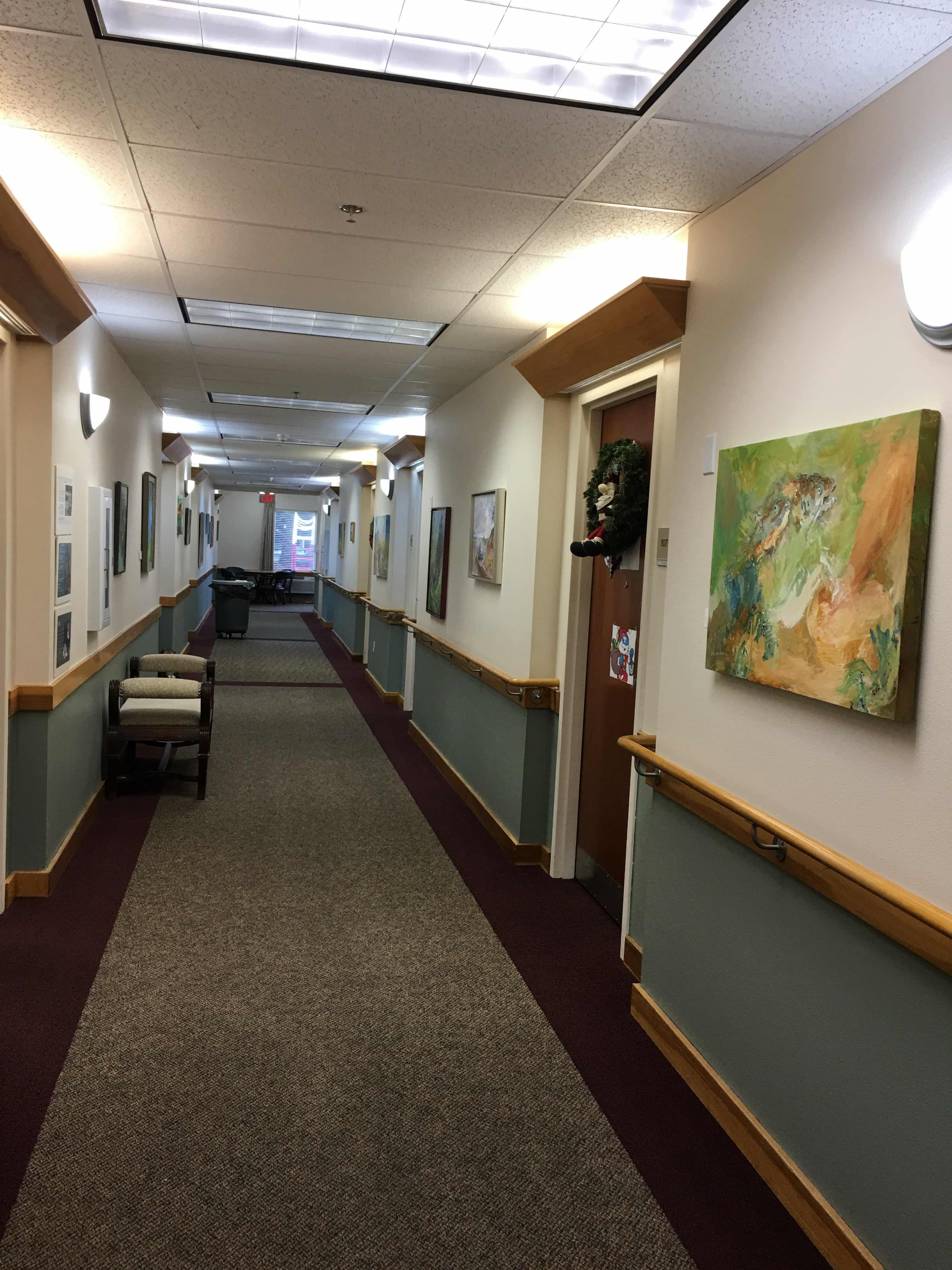
      To select paintings for the January through June exhibit, I lined up some by my family along with those of  local artists that were gifts, purchases or loans.  Most of these in the picture were selected to replace work that has been hanging in the north wing 1st floor for a year. I am thankful for being allowed me to share my collection that I do not have room to hang at home. Then when I am in the process of  hanging work, residents are eager to show me their art. I am happy these paintings add to life and joy and inspiration to so many.
Whenever I group my work or my collection together for a show, I make discoveries that please me. This time I discovered that I collect work that has a common theme. I favor subjects that are about light or the act of lighting. Rain Trueax's has chiaroscuro lighting from the bonfire.


Other works about light include a Nelson Sandgren print of  a man holding a sparkler on a very long rod. Also a reproduction of Lynn Powers watercolor portrait of  Pharaba gives me warm fuzzy feelings, I think come from the glowing eyes catching soft highlights.

In June when I will be changing these paintings I would like to share someone elses' not for sale collection.  If you have a couple ready to hang pieces that are not for sale and would like to hang them next week let me know because I am also making changes upstairs.
         Another exhibit  at the CCP January and February are 19 paintings  of mine hanging in the ground floor South Hall, an area changed every other month by the Corvallis Art Guild. From time to time I hang art with the Corvallis Art Guild.


Saturday, January 05, 2019

Andalusia

by Rain Trueax


I am a fan of documentaries. There are times when a movie just does not appeal to me. Almost always a good documentary will. On Amazon Prime New Year's Day night, we enjoyed 'When the Moors Ruled in Europe.' 
 
 
It's by a British historian looking at the architectural evidence for the Moorish presence in Spain from about 700-1500 AD. It presents a very different look at Muslims of that time and even today with the different ways Islam is seen. Beautifully filmed and quite interesting. This is the blurb for it:
'This program contends that the popular perception of the Muslim occupation of Spain toward the end of the first millennium is largely wrong. The eighth century Muslim invasion of the Iberian Pennisula was largely welcomed by the locals and rejuvenated the area with advanced technology, agriculture and a construction boom. This program describes these innovations. All this changed in the eleventh century when the regional government fragmented. That set the stage for the Christian invasion and the Islamic fundamentalist resistance leading to more of a civil war than a holy war that decimated the region with corruption, destruction and exile.'

Wednesday, January 02, 2019

by Diane Widler Wenzel: Triangle strong painting support discovered while cleaning studio

The certain tolerance that I have for chaos in our home reached a limit when I had to move very large paintings to get into a cabinet for frequently needed supplies ranging from sketch books to picture hanging wire. Worse yet too many painting rags, a large box of acrylic paints on the floor, because every inch of the work bench was covered and piled high. When starting to organize the mess, I didn't expect to discover a better engineered way to make stretcher bars for large paintings from the poor quality of second growth wood now available.
        Organizing my studio space is easier if I can eliminate some of the stuff in it first.
        Looking through my work, I could not bear to select a single picture to retire by making it into a floor covering, tablecloth, or into a practical useful thing. Sifting through my work and retiring a few at a time periodically strengthened the meaningfulness of my personal body of work. After years of sifting, I have come to the point where I feel almost all my remaining works are worthy of keeping.        There were, however, the two large ones leaning against the cabinet. They were from Habitat for Humanity for $7.00 each. I thought they would be good experiments or canvases I could use for play with neighborhood kids. So last summer I  prepared them by painting acrylic colored gesso over the original owner's paintings. A few weeks ago I experimented on one to figure out what combination of glasses or contact lenses would work over my cataract replacements focused for only near vision.  But the other canvas had mildew where it was water damaged. The neighbor kids did not come to paint yet on a damaged canvas. I didn't want to put a lot of effort into painting something that would not be healthy to hang in our home so I felt good about preparing it for the bonfire.  I ripped through the canvas with my utility knife and pried the canvas free. Then the rough knotty pine completely straight was revealed to my amazement

How could the stretcher bars be straight and true made from such rough knotty wood?  My experience was that clear straight grained wood is necessary to make a canvas that would hang flat on the wall. All the warped stretcher bars to my experience had knots.
          The secret was revealed - triangle strength.  The triangular shaped corners kept the corners square and the holes in the pegboard helped to keep the paintings light. For such a big canvas it is amazing that no brace bars were needed. Laminated to the wood is quarter round that has a triangular cross section with one side curved. the triangular shape also prevented the support from interfering with the painting. So strong is the combination of corners and the lamination that there is no need for elaborate brace bars which double the weight of commercial stretcher bars. Another plus to this construction is the relative thickness. I could store two of these to every one of the good commercially built frames this size.

The canvas under the stretcher bars is also usable. The mildewed portion is trimmed away. The rest of the canvas waits for the neighborhood children to come and play with it. The canvas is heavy enough to become an area floor covering or table protector if not wall hanging.

Saturday, December 29, 2018

approaching a new year

by Rain Trueax


As we approach the new year, it's a time for me to look back as well as forward. In some of my looking back, I picked out a few photos from our year to share. They show one piece of what we experienced. Not easy even then to narrow it down to only two from each month. The music is some I bought a license to use from JewelBeat.


So what 2019 will hold, well, time will tell :) 

Happy New Year