Comments, relating to the topic, are welcome, add a great deal to a blog, but must be in English, with no profanity, hate-filled insults, or links (unless pre-approved) To contact me with questions: rainnnn7@hotmail.com.


Showing posts with label movies. Show all posts

Wednesday, December 12, 2018

by Diane Widler Wenzel; Review of Agnes Varda's film, "The Gleaners and I"

Gleaners are everywhere sifting through harvested fields and looking through dumpsters to name two gleaning sites. But I had not thought about them until I watched a Netflix video. Agnes Varda's "The Gleaners and I".   It was filmed in 2000 when she was 72 years old.  She is well known in France as a pioneer in the New Wave films. She is a feminist and activist. The theme of the "The Gleaners and I" was our society is wasteful of food, manufactured products and without words she communicated that she felt she was a discarded senior.
In Oregon the art of gleaning is an art in the best of health.


Don gleaning firewood from dying trees  about 8 years ago

About 19 years ago Don chopping wood  gleaned 
from neighbor's diseased trees.
 

Varda believes all roles in making a film should work together. Cinematographer, screenwriter, director, etc. working simultaneously to create a more cohesive film, and all elements of the film should contribute to its message. at first I was puzzled by what appeared to me as disconnected.She combined pictures of her old hands and gray hair with interviews of people from all backgrounds eating and collecting agricultural waste and urban garbage. It was a real stretch for me to associate Verda with societies discards. She intended to say society makes older people discards and that she proves how wrong society is?

 But what was most interesting to me was the creative process of some of the gleaners who were performing or visual artists or lived creatively.
It is fun picking up glass and other micro-trash on our neighborhood roadways and then make an assemblage.

Wednesday, May 03, 2017

beginning to end?

Last week, we caught 1776, the musical about the writing of the Constitution. It was fun to watch, hard to believe it came out in 1972. That seems like forever ago, before we bought the farm and when our children were small. Where did those years go???

The film was a great reminder that the division we experience today, the compromises that we all make with what we want versus what is possible-- none of it is new. Sure the play is some fictionalized and a musical, but it did hit on key points that mattered then and now. Blythe Danner, with a small part, was amazing. She's had a long, outstanding career.
Relating to 1776, I've read that some want not to show the American flag at important events, because it is supposedly divisive. They do not want it seen as important because we need to move toward globalism not nationalism. Some neighborhoods forbid the flying of the flag-- any flag.

We have a flag. My mother gave it to us when we moved to the farm. We fly it on important days. It's looking a little worn, but I hate to replace it since it has a family history for me. Since we live in the country, folks out here don't find fault with someone flying it. 


To see what would Dreamscope apps might do to one of my flag photos, I experimented with three different apps. Each said something different about the history of the flag. They suggest what it's been through, the battles, parades, laid on coffins, the victories and yes, defeats. Through so much, even the Civil War, it is still flying-- even as some may prefer that it not. It's our history and our today. Will it be our tomorrow?


For those who want to move toward a one world government-- really??? I do not believe, without a dictatorship enforced by military, that a one-world government is possible. We are very different across the globe. In globalism, who makes the choices?

We, in the United States, having more wealth than many places, can help others, speak out when we see abuses; but do we want to be the world's mercenaries? If we don't fix our own country, who can we help? If we allow poverty to grow here, how does that help Somalia? Some of our trade deals have been intended to help other nations grow at the expense of our workers. If we lose pay and jobs, is that okay with the globalists? Most likely. Should it be okay with the rest of us

Nationalism doesn't mean isolationism, but it does mean you can't sacrifice your own poor, their hopes, to possibly help someone in another nation where too often the sacrifice had meant their rich got richer (there are always rich).


Making our own bed first is true of us as a nation but also as a people-- get your own act together, live responsibly, then you can help someone else. Otherwise, you'll just drag them down. And for another year, our flag will fly; but when it begins to tatter, we will fold it as my husband learned in school (there is a proper way), store it with respect-- and buy a new flag.


Saturday, March 04, 2017

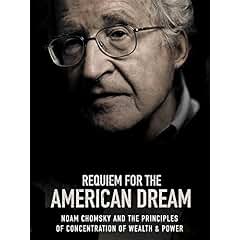
Requiem for the American Dream


The other night, looking for a documentary to watch on Netflix, we came across this one. It sounded like a provocative subject for today, and we watched it. While I have committed myself to staying off divisive partisan politics here, cultural issues are important to me-- and sometimes they stray into partisan territory. In this case, many have seen, including Sanders and Trump, how the country has gotten off kilter. When did it happen and how? Chomsky lays out his case with 10 principles. I could not find the link for it on Netflix, but it's also on Amazon to rent or buy.


The video was put together in 2015 (so it's not about Trump or Clinton but our culture and how we got here where so many American families no longer found themselves hopeful). The book came out this year. [Requiem for the American Dream in paperback]

Noam Chomsky is labeled by some as a socialist (for those who like boxes) but if you listen to his words, he's really a thinker and doesn't automatically follow any party-line-- with plenty of blame to spread around for how we got here. 

After watching the film, I went looking for more and found talks that are more current. He accurately describes how we felt when we voted for Bernie Sanders in the primary and Hillary Clinton in the main election. Not because we favored her but because she was a lesser of evils. She would not have done much to right what Chomsky says has gone wrong. 

While I am not someone who would divide up all the wealth or eliminate all borders, I do think our system has been bought and paid for with both major parties benefiting from it. When some talk about open borders, it's not them who will lose their job or see their wages go down with cheaper labor flowing in. (that might be a little partisan).

Anyway, I think it's worth watching the movie on Netflix and also the links below. I spent over an hour watching them. I especially liked one thing he said-- and I've said it in my rant-- this last campaign did not have issues debated and the media didn't bring them up. Time and again it came down to personalities. I am considering watching Requiem for an American Dream again for how so many lost their chance to live the middle class life and maybe within the discussions find a clue to what we do about it now. Once power is ceded, it's rarely returned. 

And yet, there is a ray of hope. While Trump was big money, he had no big money behind him. Sanders almost took the nomination with no big money. Both had the people, some of the same voters, who believe DC is a swamp and want it drained. [Chomsky on Bernie Sanders]

The oligarchs in the end can pay for advertising but they only get one vote-- despite Citizens United. The people can knock over the apple cart but need to think long and hard what that will mean for them. Chomsky presents some realistic explanations for how it went wrong and what can be done now for those who want a viable middle class-- it's the engine of creativity, production, and a goal the lower economic levels always could reach toward. None of us are likely to get wealthy but we can have a good life, own a home, have some vacations, raise a family-- or at least we used to be able to have those things. The goal now is to figure out how to make it still possible.

One thing I especially like about Chomsky is how he doesn't have one side he defends no matter what. He calls it as he sees it.


Chomsky said, "The most predictable aspect of Trump is unpredictability. I think it’s dangerous, very dangerous." I should add it's what Ranch Boss and I also have said all along about Trump. He's a wild card. It's uncertain what Trump'll do because he's not an ideologue who are more easily put into a box as to possible future actions.

Trump could surprise the right and the left and even (heresy to say this) become a great President that eventually ends with him being attacked by those who wanted a NeoNazi and came to realize he wasn't. He's played a risky game to get to where he is as he needed votes and to get them, some came from a very unstable element in our society. The extremes on the right and the left can be quite dangerous.


Saturday, March 31, 2012

Romance and starting over

Romance.  Ah I know for as many sighs of satisfaction, there are an equal number of groans and bah humbugs. Well I go in spurts for how I see it all. Right now with doing a lot of writing, romance is high on my list and that includes romantic films.

So being on a James Garner film festival kind of mood, I remembered Murphy's Romance. It came out in 1985 which means I was 42. Good Lord. That seems like a lifetime ago.

James Garner was 57 and I might add in prime condition. Oh I am being distracted. Sally Field was 39 and playing someone somewhat younger. I might add, she was in prime condition too.  Let's just say, she fit those jeans really really well.


Murphy's Romance is a sweet story that builds slowly about a woman who left a bad marriage taking her son and trying to build a new life for herself a long way from that old life.  With a lot of work, she settles into a small ranch on the edge of a small town in Arizona. Another reason for me to love the story. Old house, old ranch buildings and her desire to start a horse training business. I admit I did keep wondering when do they run into the scorpions or rattlesnakes... old deserted buildings and all, but I guess that was another distraction.

Murphy is the most successful man in town. He's gone through his own hell as a widower, pulled himself together, and has a pretty good life going. He knows himself well and soon goes about wooing Emma as we used to say our bull would do-- slow and steady. Then along comes the ex-husband.

It's hard to say how well the story would do in the romance genre today given  readers seem to want something that grabs them instantly while this story builds slowly without a lot of action unless you like stories about human nature.

From Netflix, we watched Larry Crowne, a nice story about a really nice guy who had recently been divorced, when he didn't want it, and then finds out he's being fired supposedly because he doesn't have any college. This is the kind of guy who goes out of his way to do everything right. Now he finds that doesn't count for anything. He has found the life he planned totally thrown up into the air. He has to figure out what he can salvage-- turns out more than he imagined.

Tom Hanks really does capture this man's soul as he goes back to school and slowly rebuilds his confidence. Boy, can Hanks use his body in ways about which other actors can only dream. He goes from an insecure dweeb to... well rent it and find out.

Julia Roberts is the disillusioned community college teacher who teaches speech, has a lousy marriage, and learns a few things herself. She is the only one who can make those puffy lips work-- because they are naturally hers!


Then came When Harry Met Sally which is an oldie with Billy Crystal and Meg Ryan before she ruined her lips.  Nora Ephron, Rob Reiner and Billy Crystal wrote it with a lot of improvisational ideas that they worked into the story which is really about male-female relationships. We thought it was funny but also a lot to think about. Interspersed in the plot are old couples discussing how they met. The words came from interviews Ephron did but the couples are played by actors. Divorce and starting over is a factor also in this film.

There are times when I can barely stand watching romances. I still don't like them when they are tragic. I need happy energy. Comedies are perfect. Laugh. Yep, we all need to laugh these days.

Wednesday, March 28, 2012

On aging

After reading this blog-- Age and Its Awful Discontents (?), I was going to write a comment there. My thoughts were so lengthy that I knew it'd never pass muster as a comment and decided to put it here instead as a blog on the topic. Ronni was writing about an article in NYT-- Age and Its Awful Discontents.

I felt torn on what I would say there about her thesis and the original one by Louis Begley. On the one hand, I do believe it's better to be positive. On the other hand, he's living his truth. He is openly saying what he feels is ahead for him after a very good life. Should he deny what he feels because it makes someone else  more comfortable? Should he pretend he's happy to be looking old? Denying their reality is how many people feel about those suffering from depression-- take a pill or pretend you don't feel it to make the rest of us comfortable.

The thing he is experiencing is what elders do experience-- if they are aware. He's just admitting it. Whether it has to depress you, that's another story and I didn't feel he said it was depressing him. Just he could see the road ahead. He now better understood what his mother once felt. Today the talk is that 60 is the new 30. No, it's not. It's different. Going under the knife won't change that.

Recently I read a blog where the writer was feeling down on knowing things wouldn't get better. It wasn't whining. It was his honest feelings after some major health problems and knowing with old age, it wasn't going to be better as so often in life, he had felt it would. Now he might have been wrong on what would happen, but I didn't try to tell him that.

What I said (more or less) was when I get to feeling some of that, I think of this as part of a stage and cycle of life. Yes, the aches and pains of age won't be going away-- aspirin and glucosamine do help with it. The lessening of strength won't disappear-- although some of that can be temporary after an illness and will be better. We won't be back to what we were at thirty no matter what we do. Youthful, physical beauty won't come back-- not even with plasticating our faces.

What Begley was saying was he could now empathize with his mother as he finally understood more of what she felt. I understand what he felt about his regrets as I have some of them regarding my mother.

Mom lived on our farm in a mobile home. We took her to doctors and shopping as she had macular degeneration which meant she could get around but she 'read' through audio books from Oregon State library and she could no longer drive. Mom was not a complainer, but I was busy during those years. Kids in their teens. Often driving to town (20 miles each way) several times a day.

Then the kids were gone, but I still did not do for my mother what I could have done in being with her more often. We had holidays together, saw her daily, but she was alone a lot. There is no use in thinking back and bemoaning it; but I think of it now and then. I could have related more to her needs but Mom was not one to go to doctors nor to complain. I had my own life to lead...

Now my kids have their own life to lead, and I try to remember how it was with Mom and understand this is no time to get my feelings hurt. I have things yet to do before I sleep also. I do live an exciting life right now. That won't last. That's not depressed talk. It's reality. How long the good energy years last will differ for us all.

I related to what Begley said not as a whining but as an awareness. He's a writer; so he uses those awarenesses.  He also was trying to put out that there are two sides to this last stage of life. Half the time the oldsters want to be taken as though they are as good as they ever were. Half the time they want special compensation for not being as good as they ever were. I think the best way to look at it all is be who you are and where you are. Live it fully. Don't anticipate the future in a negative fearful way and don't live in the past. The moment is all we have, any of us-- at any age.

In my own life, I have seen a lot of growing old-- with my older relatives (who are all dead now), with the livestock we raise and keep until they are geriatric, and with the many pets I have had throughout my life.  What I think is that old age is different. It's not middle age. I can see and feel those differences beginning. I feel I am lucky to have gotten here as many I have loved never did.

For each of us, it is what it is. I could try to deny it, not live it fully, live in a fantasy about what it is-- negative or positive-- or I can do what I did in all the other stages-- live it fully, every bit of it and that means owning the aches and pains, the aging body, but also the many experiences and the wisdom I have accrued through those years. There is so much about it that I am enjoying to the nth degree. Some parts are less fun. But it's all real.

If Begley was to be a curmudgeon (the article didn't say he was), he probably won't find people wanting to be around him, and if that's okay with him, then it's his choice. But it won't be because he's old. It'll be because people like to be around someone pleasant.  And frankly even if he was acting pleasant (even when he didn't feel it, his family still might not want to come around as they are busy with their own lives).

If an elder wants to live in their past, they can do that, repeat the same stories over and over, but again, they better be the type who enjoys solitude as most people will get tired of the stories they heard so many times. That's not because that person is old. It'll be because they are boring.

Elders who live actively in the present are interesting to be around because they are still doing things. I think young or old people search out certain kinds of people with whom to spend time. Elders don't get a pass on that. If someone is a person who likes to be around people, young or old, they better develop interesting topics they can talk about or be a great listener and share wisdom-- when asked.

My mother was that kind of old woman. When she found out my husband's mother loved a particular soap opera, my mother who hadn't seen soaps for years, she watched them to have something to talk about. When a person is old, they can read the newest book and be able to discuss it, have seen a good movie (assuming they can see) and doing those things in order to share is part of the key. It helps to draw people to them (if that's what they want) and also to stay interested in what's going on themselves.

Learning to listen to others can be a real key. Telling someone younger what to do, or not listening to what they say and only trying to turn each conversation to ourselves, none of that goes over well-- at any age. Stay interested and even if nobody shows up, life will be better.

I think this guy was sharing what he saw and he will be jumped on by those who want to deny the full experience of aging and turn it all into something enjoyable. I think it's more that way for some elders than others. Some of that is a person's temperament to begin. Some is their health.

Old age has its fun aspects. I felt it rewarding when I reached a point (when I turned 60) where I felt wow, I did it. I had a life. I lived it all mostly as I wanted. Some would say you should have done more. It depends on what they consider more. I followed my path. I raised children to adulthood who became responsible adults. I got to see my grandchildren. I had my share and then some of experiences and now it's my turn to come to the last act. The last act can have some misery attached. It is all important but it won't all be a pleasure.

Begley is a writer, something that encourages introspection. He uses what his life is and what he observes for his fiction. I saw the movie based on his book, About Schmidt, and thought it was wonderfully done but wouldn't want to see it again.

For a film on aging, I preferred Water for Elephants. We saw it last night. it began with an old man, who had had a full, rich life and didn't want to stop living it even though his kids weren't going to be any help. He shared his story, which is the bulk of the film, with a young man as a way to keep leading an active life. Hal Holbrook played the elder, and he got it.

Before I write a book here myself, I'll end but this is a topic that is, of course, of interest to me, since I am living it.

Monday, March 12, 2012

Game Change

Because I have HBO, because I am a student of human nature, because I follow politics (which is about human nature), naturally I was going to watch Game Change when it arrived Saturday night. I had read a lot of reviews regarding what the right and left wing thought of the film (right-- boo hiss, you there, yes, you in the bubble, do not watch; and left-- painted McCain as a saint and Palin too sympathetically). The film didn't try to follow the whole book which covered the left and the right side of the 2008 campaign.

Despite liking to follow politics in the papers, articles, news, etc., I had not read the book because I read very very few books about it-- not even Primary Colors, which was a best selling book with a somewhat similar behind the scenes look at politicians. If you remember Primary Colors, the author wanted to remain anonymous for a long time but was finally outed. That book, which also became a movie, was not friendly to the Clintons with the colors it painted them. I did see that film which starred Travolta as Clinton.

My reason for not reading Game Change was I had just been through it. I was tired of it, wanted to go on myself, and thought I pretty well understood what had happened behind the scenes. It was based not on a writer who had been on the scene but interviews and discussions with those who were (who would talk to them). I might read it now to get the Clinton/Obama story.

The McCain/Palin side of Game Change was all from the aides who had adored McCain and, I think, the story was impacted by that. If Senator McCain really chooses to never see the film, that's his choice, of course; but I thought it painted him as a heroic man, who if he had been president might have done a pretty good job at it (incidentally, something I do not think is the case).  I've read criticisms that his picking Palin was shallow. The film didn't show it that way. It instead showed that did what he thought would be good for the country and his chance to win. You can't govern if you can't win!

I have often said I thought if he had picked who he wanted for VP, Joe Lieberman, he would have won. His aides felt he'd have lost his base. Seriously? That radical right group would have sat it out or voted for Obama? The mainstream Republican who always votes would not have? I disagree as they hated the idea of a leftie who was also black and charismatic. They would have come out and he'd not have lost so many in the middle.

Ed Harris, of course, always seems heroic even when he's a bad guy; but in this film he's playing a man who is good, who feels he deserves his shot at being president, believes his ideas are good ones, and ends up making a catastrophic choice, partly because he does fly by the seat of his pants and considers himself a risk taker. I have read a ton of reviews that disagree but still do not think the movie was unflattering to him.

You might say he trusted the wrong people, those who vetted her. Somehow they missed important questions that, to me, a grade school kid would know-- like that the Queen doesn't rule England. When Steve Schmidt heard her say that is when he knew (in the film) that they had a problem.  It wasn't the complex other issues that was so disturbing but a simple lack of interest and knowledge of history and the world. They didn't ask her foreign policy questions until it was too late.

What the film showed was frankly a sympathetic view of a very complex woman, who had a back-up mode when threatened (one she wasn't kidding about in her speech-- pit bull with lipstick). Sarah Palin is depicted as a pretty nice person until she feels cornered. From all I have read of her performance in Alaska as mayor or governor, this wasn't new to her behavior. It's what she does when she is under pressure and feels out of her depth.

And boy was she out of her depth running for the vice-presidency of this country, and I think she felt she would become president through that route. I didn't expect to feel sympathy for her but teared up as I saw the pressure she had been under, her total frustration at being asked to do what she couldn't, separation from her family, and not being allowed to use what she felt were her best qualities. Moore said she was not aiming for a caricature but the real woman as the book evidently portrayed her. I felt she succeeded.

What Game Change showed was a woman who truly believed in her religion, her family, her own role in the greater picture. She simply didn't have the ability to understand deeper concepts. She had another ability though that made her very popular with a certain group-- she could connect with people, and she could arouse their passions.

As she learned her power, and felt betrayed by the McCain/Palin aides, she became the dark to Obama's light which makes it a bit ironic. By that, I mean, if you heard her speeches back then, she wasn't talking positively but rather playing to the fear and anger that some already felt at the possibility of an Obama presidency. She was heating up what was already a dangerous situation.

It turned the fall campaign into something John McCain didn't want as the people who were most angry and frightened at the possibility of Obama gaining power were stirred to a non-thinking rage. Whether the movie totally showed McCain accurately in all ways, I remember the news clips when he confronted these crowds, when he and his aides saw the hate and fear that was being aroused by a combination of the Palin rhetoric and the temper of the people. It is something that is still with us and only getting worse. Some politicians are stoking it and others see, as McCain did, where it was taking the country.

To me, Woody Harrelson, Julianne Moore, and Ed Harris were superlative. You do not get better actors than those three. I have seen the real Steve Schmidt many times on television and Harrelson nailed him as did the other two actors with Palin and McCain. They interspersed news footage of actual people with the actors and it worked to make you feel you were looking in on what happened.

Yes, it was from a viewpoint that Sarah Palin didn't discuss in her own book or the positive films about her. That's logical. Palin is not a deep thinker in terms of even assessing her own abilities. She could memorize lines and deliver them flawlessly. It showed her as totally believing in herself, if nobody got in her way; but she didn't grasp her own weaknesses.

To me one of her biggest flaws was her inability to put together facts into a concept. A + B = C.  If you can't connect things, it is to me a fatal flaw if you want to be President of the United States.  When asked to do that, she was nearly in tears. She just doesn't get the complexities of life, how things aren't black and white. In this film, they showed that to her-- they are. Which leads to my next blog because this subject deserves more than one.

Really though, don't be afraid of this film if you are leftie or rightie. It's well done, well acted, and like Ides of March, it does give an idea of what is behind the people out front, those who often make decisions for all the wrong reasons and without enough thought. Yes, it is from one viewpoint as was Palin's own memoir as well as that of Obama or McCain. What we as people need to do is be able to synthesize the different views into one truth. That's the catch, of  course as well as a fact. A + B = ?

Monday, March 05, 2012

Ides of March


For anyone who hasn't seen it or heard about it, I recommend Ides of March which is now on Netflix. It is a behind the scenes look at what happens in political campaigns from the perspective mainly of the people who are truly behind the scenes, the strategists. Is it disillusioning? Probably but only if you thought politics is an inspirational, noble method of working out what will happen in a country-- who the leaders and what the laws will be.

It's not as though politics are only about governments. They are in every aspect of life where a group of people decide how to spend money, what needs to be done, what they want for a business, what their product will be, and on it goes. I've seen it in schools, churches, and corporations. I don't think there is a way around politics other than staying away from other people, only concerning ourselves with what we do, and being willing to let someone else call the shots for the rules we must live by.

Even then politics will have determined the food we can buy, how much money we will need to spend for this or that, and whether the community in which we live will be changed totally right beyond our fence-line-- if they let us have a fence.

The workings of human nature; how we do things; at what point will we be corrupted; what we expect from others; what is nobility... Is there nobility? These are all things Ides of March explores.

Is it disillusioning? Maybe-- mostly though for someone who hasn't been paying much attention to humans in group interactions and most especially the political climate today. If someone can go into a group meeting and not notice the snipping, the aggrandizing, the pressure to win, maybe they won't think politics impacts them. It still will have.

I thought the film was excellent, fast moving, informative, thought provoking and had a perfect cast led by Ryan Gosling, George Clooney, Paul Giametti, Phillip Seymour Hoffman (all four among my favorites), and although their parts were smaller, on the distaff side, Marisa Tomei, Evan Rachel Wood, and Jennifer Ehle (one of those three doesn't exactly fit the definition for distaff).

This film was put together like a fine work of art as it was adapted, mostly I think by Clooney's vision, from a book by Beau Willimon-- Farragut North. Willimon had worked for the Howard Dean campaign although this is clearly not autobiographical. What it is is an inside look at human nature using the vehicle of a political campaign

I really liked it and would say it was one of the best films I have seen recently not just for the story, the acting, but the warning, and I don't just mean for politicians but all of us for our own motivations and moral values.

For anybody who thinks moral values mean a religion-- it doesn't. Moral values are those which we have within us for the rules by which we live, our own personal code of conduct. Are they bendable under the proper persuasion?

Tuesday, February 07, 2012

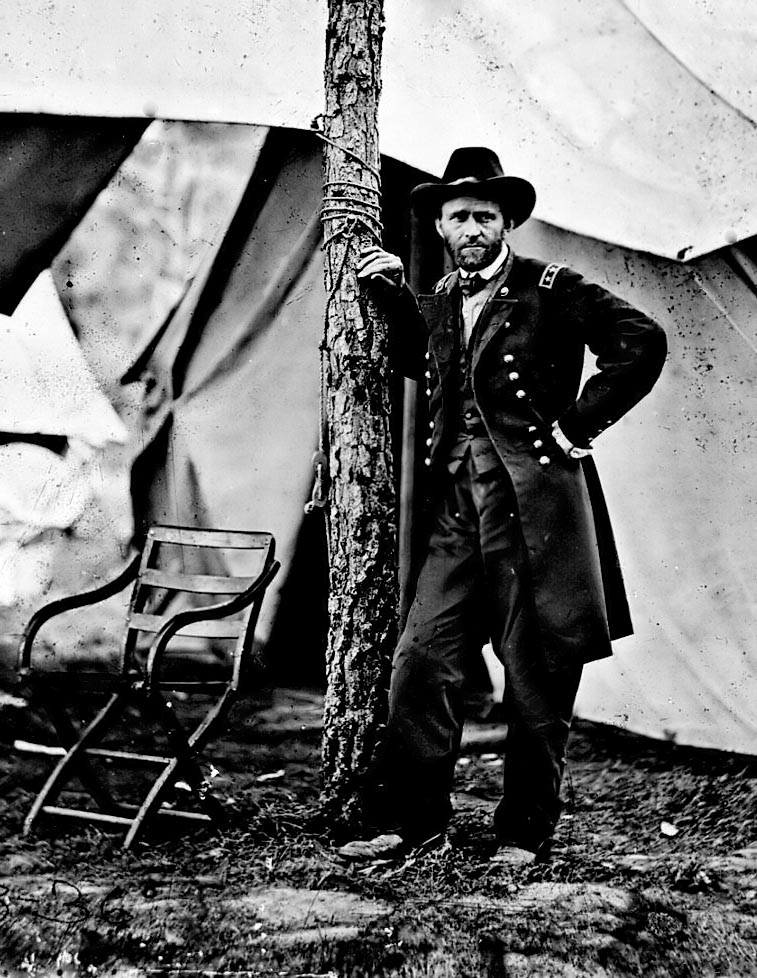
Ulysses S. Grant: Warrior/President


After watching Lewis and Clark, I was happy the next documentary to arrive from Netflix was Ulysses S. Grant: Warrior/President: American Experience. This is another case where I thought I knew some things about the man but found out it was not so much in actuality. The film goes into his childhood, how he got where he was in the military, his tactics when he fought battles, how he became president, and the aftermath of his being president.

What made it even more interesting was how it depicted the historic period into which he was thrust. We all know he was the leader of the North during the Civil War and got elected president, had a drinking problem and had a lot of graft during his time in office. Many reckoned his presidency to be a failure, and he took the blame for many things that were part of the period.

For one thing the country was as divided as it is today. Have we ever been truly one people? Seems unlikely if you look at history. Are all nations so divided? I don't know to what you can attribute our fractiousness, but it's sure there in the run up and then aftermath of the Civil War. It's what Grant inherited.

How many of us knew how many blacks were massacred in the South as vengeance by the whites who blamed them for their downfall? They did not want to let the blacks vote or gain their freedom in any real sense. Naturally the North felt otherwise, right? Nope, not right.

Grant tried to put a stop to the Southern vengeance taking, but the North didn't support him. They were afraid of blacks too and did what they did in less open and violent ways but no less determined to keep blacks in their places. Remember this is a nation that likes haves and have-nots despite the lip service it gives to wanting it to be otherwise. Oregon was pro North while it also passed a law forbidding blacks to own property.

Grant really never even had to run for the presidency as they wanted him and they simply chose him while he only had to say yes. If he'd had to campaign for it, he'd likely have said no. He was a very private man but felt a duty to try and reunite the country. He did want to give his family security, but he didn't live in a time that offered economic security to anyone.

The corruption attached to him though was about his inability to wisely judge people. He didn't personally profit from it. To say he was a poor judge of character is probably accurate and many took advantage of that.

The main thing you get out of this documentary is the portrait of a nation at war, a man who strode through it determined to always finish what he started, and then a man who earned the respect of a nation despite his failings. It seems even then people really liked best to vote for those who seemed like them. In that Grant both was and was not a good example.

The other thing it reminds us is the impact of those massacres right after the war. That was done to intimidate and frighten blacks into staying submissive. Some say blacks didn't do enough to claim their freedom. Try knowing that you could just be standing on a street corner and be gunned down, that the law wasn't for you; then tell me how assertive you'd be. Between that, the arbitrary hangings, and then Jim Crow laws, it took a lot to get us to where as a nation we'd be ashamed of what we'd done and finally make a united stand for Civil Rights. 

I liked this two part documentary from Netflix a lot as it showed how much of what we face today is still here because we never really dealt with it.

Saturday, February 04, 2012

Lewis and Clark


Last week we watched the two-part Ken Burns documentary on the journey of Meriwether Lewis and William Clark when they crossed the American continent from where it was settled in Missouri to the Pacific Ocean in 1804-06.


Naturally coming from the Pacific Northwest, I knew the story pretty well. It's part of our education out here and the Northwest is full of signs telling you Lewis and Clark stopped here or there. It can almost become a joke as you drive up the Gorge, through Washington and Idaho into Montana. Any little possible location is marked.

We got this documentary from Netflix watching it over two nights. I didn't expect to learn really anything but I did-- or at least was reminded of things I had forgotten.

It was told through the letters of those on the Corp of Discovery expedition and not just Lewis and Clark. Their words were read by various actors. They didn't use make believe actors to act out any scenes but used old photos (naturally none from the actual trip but there were sketches), scenery and the letters to tell the story. The two captains and 32 men (those numbers vary as to how many started out and a few went back with samples thus not making the full journey) began the trip.  They then added Sacajawea (spelling and pronunciation of her name also varies), her baby, and her husband.

When you think about the daring involved with this, it's pretty amazing and even more so that although they nearly lost their lives several times, the expedition returned having lost only one man who died of something that might have killed him in those days even with doctors handy (possible burst appendix).

The idea was Thomas Jefferson's. He had just acquired the Louisiana Purchase which, as would be the case today, was not popular with those who didn't like the idea of expanding the government's reach.  Jefferson wanted to know what lay out there, get maps and have the expedition keep journals and do a scientific exploration as well as establish friendly relationships with the Native American tribes along the way.

The film is beautifully done with scenery that looks a lot like they would have seen. How they found all that had to be a challenge of its own as most of that country is inhabited today even if sparsely.

There were some disillusioning things about it. Like we want to see men like William Clark as heroic in all areas because they were in a big one. But how he treated his slave, York, who had been brought along as an equal member of the party but was refused his freedom as a reward when he returned with them, well it was less than admirable. After five years, Clark finally relented but mostly it was from pressure by York and not out of the goodness of his heart. He didn't want to lose such a valuable slave. Well couldn't he have paid him a salary commensurate with that value?

And then there is the depression of Meriwether Lewis who died presumably from suicide only three years after they returned. There is some controversy over that suicide since it was in a dangerous region called the Nachez Trace. I have a book which makes a good case for it being murder, but Lewis had well known problems with severe depression and had previously tried to kill himself. His being shot twice, once in the chest and once in the head doesn't mean he couldn't have done it. In those days there really weren't good solutions to severe depression and Lewis had probably felt he had the greatest success of his life at 32 with only downhill to go. Who knows but it was a sad end to his life whatever the truth of his death.

The kind of courage and stamina that it took to do such a journey in a time when if you ran into trouble, you couldn't ring home for help, well it is indeed impressive and to leave on a trip where you really didn't know where you were going exactly, well it was very courageous. Their only backup was their wits and what they brought with them.

Their investigative trip began the opening up of the region which would have happened anyway with the westward thrust of this country; but this helped people to understand what was out there and laid groundwork for someday getting Oregon Territory from the control of the British.

You know, the plus of watching such a documentary is feeling uplifted by what men and women can do. We need inspiration. I think it's even healthy to realize the noblest of people have their own failings. It's kind of the whole picture of man's potential and the pitfalls for which he must beware. The other thing is-- in what a wonderful country for beauty we have been blessed to live. I have seen a lot of the places along their path and it's as beautiful as this movie portrays it.

Saturday, January 28, 2012

Incendies

I wish all the people who talk so loosely of revolution, insurrection or civil war would see the Quebec film, Incendies. I won't say they'd enjoy it, but they'd have a lot better idea of the real cost of such wars for ordinary people, those who didn't ask for it, but end up brutalized by it.

Today we hear a lot of lose talk on the war on Christmas, the war on the rich, the war on the poor, and on it goes with blame being dispersed many different ways as to who is guilty of the problems in our country. Well one thing that is not going on is anything like what the main character in Incendies experienced when she was born into a country where there was a real, violent and very brutal civil war between Muslims and Christians. Although it's not specifically mentioned, it is likely based on what Lebanon went through in the 70s.

The story begins in modern times as a brother and sister, twins living in Canada, discover, when their recently deceased mother, Naval's will is being read, by her employer, their family benefactor, and a notary, that she wants them to contact their father and brother and deliver a letter to each.

Jeanne and Simon not only didn't know they had a brother but had thought their father had been killed. Jeanne feels an obligation to find the truth of her mother's past and travels to her homeland for the answers. If there is a father still alive, she wants to find out. Simon doesn't want to open this can of worms and only reluctantly joins her after Jeanne calls him begging for his help as the story she has discovered is more complex than she can bear alone. Lebel, the notary, comes with him as a help that likely without the mystery would not be able to be unraveled.

The sub-titled film is brilliantly done but violent and about subjects that many of us would rather not think as in the complexity of life, the consequences of actions, and sometimes how things beyond our control can mark us for life. I do recommend it; but if you are already convinced civil wars are bad, if you cannot tolerate facing how brutal life can be (it's not graphic but emotional in the impact of the violence), it probably is one to skip.

I am glad I saw it as once in awhile I think I need such reminders for why it's important to speak out for peaceful solutions to our own national problems. It is also a good reminder of how fortunate we are to have been born into countries without such vicious, government-led violence. Oh I know our police sometimes hit those they consider out of line or breaking the law.  The violence these people experienced was on a whole different level. Let's keep it that way.

Sunday, January 08, 2012

Mao's Last Dancer


When I have seen a particularly good film, I ask later what made it so exceptional? I mean I watch quite a lot of movies, many of which I enjoy; but only once in awhile does one move me so deeply that I am in tears. Mao's Last Dancer, based on the autobiography of world ballet star Li Cunxin, is one of those.

What makes a film so moving? This one is very beautiful which alone can touch emotions. It is well done as it tells the story of Li Cunxin from his childhood in China where he was chosen from a poor village to be trained in ballet, his teen years as he began to perfect his skills and develop his emotional strength, and finally as an adult when he comes to America to perform for three months with the Houston Ballet Company. Three different actors portray the dancer through those stages of growth-- the beginning, the development and finally the reward.

To go back and forth in time, as Li remembers his experiences while he is in Houston, is certainly the sign of a gifted director when it works. Australian director, Bruce Beresford, fits the criteria and he brought it altogether beautifully for viewers. To understand from where Cunxin has come is to understand what comes next when he announces at the end of his three month time in Houston that he does not want to immediately return to China.

This was in 1981 and our relationship with China was still back and forth. Although Mao had died in 1976, China was working out who it was, who it wanted to be in the world. Tienanmen Square was eight years in the future. This defection was something the Chinese leadership had feared in allowing him to go to America, and they would do what they could to stop it happening. His defection would be bad publicity for them in the world and among their own people. Li wanted freedom but really not to lose his connection with his own people.

However, the reason this film is so moving goes beyond a wonderful story to the deeper elements that lie within it. Tears come from realizing the price someone pays for greatness, for understanding the value of freedom, and how important family and culture are to our life. Besides being so moving, it is the kind of film that leaves a person thinking long after it has ended.

In the last few years the term American exceptionalism has been much touted. Anybody who doesn't say that Americans are the best must not be a true lover of country. Well what this film brings out, I think, is that it's human exceptionalism  that so awes us, and it can be found many places and among many peoples.

Most of us live lives that really leave us with no clue of how difficult it can be to rise to our highest potential. We either don't even try or our highest potential is not that much of a challenge for us-- perhaps we never even discover what it is. What Li Cunxin reminds us is what it takes to rise to the top in a world where there are not many, the price that is paid, but also the sacrifices of those who love us and whom we love.

The illustration that inspired him of a man learning to draw back a bow, the strength required to do that, and how it applied to dancing, that his muscles would let him fly, that is true of so much in life on many levels.

The film (and probably his book which I now want to read) also emphasizes how important freedom really is. It illustrates what we can sometimes be asked to sacrifice to attain it and why we should not easily give it up-- especially not in the name of security. It is secure in a cage. Want to live in one? Yes, in a culture, we do need rules. We need some protections, but we should be wary of those who ask us to give up our individual freedoms without a very powerful reason because often what they really want is to grow their power.

I highly recommend this film. It's on Netflix. After we saw it, I bought it from Amazon as I know I will want to see it many times if for no other reason than the marvelous dancing. There is nothing more awesome than watching gifted ballet stars at their height. Awesome doesn't begin to describe it. Li Cunxin was that kind of dancer and so was the actor who portrayed him, Chi Cao.

Sunday, December 11, 2011

Under the Greenwood Tree

Possibly because of all the turmoil we are experiencing in the world, maybe because I can, thanks to Netflix, I have been watching a lot of period dramas especially those put out originally by BBC, A&E, or one of the major film studios. Sometimes I watch the same drama by every possible producer just to see the difference in techniques and ideas for bringing the stories to life.

Some stories are such classics like Jane Eyre, Pride and Prejudice, or The Scarlett Pimpernel, that you can find them done in different eras with the adjustments that the producers and directors see would be preferred by the modern culture.  As best I know it, I have seen every version of all of Jane Austen's stories.

Charlotte Bronte's Jane Eyre was recently turned out again by a big studio and I have now seen every version of Jane Eyre that has been made. There are a lot of them. The best, by the way, are those done as miniseries because it's such a complex story to turn out in two hours. A miniseries can take its time and flesh out the nuances, tone and shadows.

There is one of these old classics I have deliberately skipped but might give it a try, or at least the newest version, and that's Emily Bronte's Wuthering Heights. I have only seen it with Sir Lawrence Olivier. The problem I have with it seems to be a difficult story to want to view or to spend time but maybe my view of it will have changed with my age.  I have mentioned before that I don't like tragedies. I see too many of those in real life.

This last week we worked our way through one of those period dramas, a miniseries, George Eliot's Middlemarch which although not exactly upbeat in the characters and events, is certainly an excellent story about how we can create illusions that ruin our lives, how money is both used to control and the lack of good sense regarding it can ruin a life. The characters really are fleshed out and it brings the viewer to that time and how people often do react in good or bad ways.

There is one though that as far as I know has only been done once and it might be my very favorite-- Thomas Hardy's Under the Greenwood Tree. It is also the only one of these films based on a book written by a male. When I began watching it (rented it through Netflix taking a chance as I didn't know the story), I thought uh oh. This is Thomas Hardy. Will I regret renting it? I not only did not, I happily ordered it to have my own copy for whenever I want to return to Mellstock and more time with Dick Dewy, Reverend Maybold, Farmer Shiner, Fancy Day, and all the delightful secondary characters.


Under the Greenwood Tree is a romance but also a story about motivations, Victorian England where the mores were strict for what was right to do, and about social interactions where people must find their self-worth. It is very well-acted. The side characters are as much fun as the four main protagonists as Fancy must choose between three very different men. Will she make the right choice? Well that's why someone watches such a story, to find out.

I do think there is value in watching these stories of earlier times where often people did wrestle with the same problems we do today. Life has changed a lot but human interactions sometimes not so much.

Wednesday, October 05, 2011

Who does she think she is?

[Who does she think she is?] is a documentary by the same filmmaker who did 'Born in Brothels.'  The subject here is women artists, from many medias, and how their work impacted their marriages, child rearing and creative output. I thought it was an interesting look at quite a variety of women and the price they paid for what they felt it crucial to do as creative women.

I had not realized how few women artists actually get shows in museums or are able to make a living from their art. The ratio is like 10 women (at the best) to over 100 men for having their work in museums. Is it possible that's because women aren't as good? Unlikely. In many cases, with top museums, the ratios are even less for work in their collections. Why would this be?

Men complain every time women bring these things up as though this is all about nature for men to be so far in the front; and women are being bitches to even mention it. The evils of feminism was painted as hatred of men instead of looking for fairness or even for understanding why something is as it is. Can we really blame men for the way it is or do women share in the blame by both their acceptance and possibly even encouragement of the status quo?

It is not that a woman cannot have a job. Certainly they can and most women at least in America must work-- married or not. The problem comes when a woman is in a career that doesn't stop after eight hours. Art is one of those, and it is even more complicated if the work is little rewarded financially. You receive money for something, and it has value. No money equal no value in the eyes of many people.

Some of the husbands in this film were proud of what their wives did; but others were threatened by what it demanded and it led to failed marriages. These were all women who had decided to have children. I think it is particularly difficult for women who want to be in a relationship and have children while also earning respect and a living in the arts where they have to fight harder to gain recognition than a male would have to do.

The documentary is on Netflix, and I do recommend it for the art it displays but also the stories of these women and the price they have paid in terms of broken marriages and sometimes children who don't have as much of mom as they might wish. It is about real people and not the artists on the top of the heap like a Georgia O'Keeffe but those who are struggling in the ranks.

Friday, September 09, 2011

The Dilemma

Through Netflix, we took a chance on a Ron Howard film starring Vince Vaughn called The Dilemma. It's a comedy but one of those ensemble stories which also confronts a serious issue. If you know something detrimental about a friend, say that their partner is having an affair, do you tell them or not?

Not only does it explore friendship, what we owe to a friend; but also how well do we really know anybody. It's funny but more than funny, it's about a real issue that we all have to think about once in awhile if we have close friendships-- when do we interfere in their life? If we do interfere, are we helping or hurting?

I don't really know if the film got good reviews, but we enjoyed it for a slice of life kind of movie with, of course, larger than life comedy tweaks.

Tuesday, August 09, 2011

Rango

When I ordered Rango from Netflix, I had little confidence that I'd like it. It seemed kind of odd, a chameleon as a western hero??? But it had two things that drew me to it. One was two of my grandkids had said they really liked it. The other that it had the voice of Johnny Depp for Rango.

What I didn't know is how much fun it would be as it served on one level as a children's movie (although likely not real young ones as it does have some scary stuff) but on the other level as a spoof on westerns-- in fact on any genre films or books.

After we were a bit into it, given how much writing and analyzing of manuscripts I have been doing, I started laughing as it was lampooning all the things I love as well as the things I am writing. Westerns do have those elements that must be in them. The tops though was the Spirit of the West (based on something that was not Western at all), and the surprise as who voiced it.

For anybody who wants a break from depressing stuff and who has been a fan of western movies (we had just watched Tall T with Randolph Scott as our previous Netflix), this movie is a lot of fun. I plan to buy it eventually as part of our collection of kid flicks. For any fan of westerns, there is a lot of humor in it, some great character voices who pretty well cover what a Western must have to be true to its genre.

Tuesday, April 12, 2011

Two very different men

Every moment and every event of every man's life on earth plants something in his soul. Thomas Merton


Last week I had ordered two different documentaries to come one after another. The first was the story of Frank Lloyd Wright. I had been in his home, Taliesin West in Arizona, many years ago and found it quite interesting in terms of its connection to the land. So I thought it'd be good to learn more about his life-- of which I had known little. Creativity sounded good to me as one subject to explore. It was a Ken Burns special, which normally means good.

Farm Boss and I were tired that night. The farm has had more than a few upsetting hassles recently due to weather and who knows what all. So we turned it off after maybe 40 minutes with the intention of watching the rest the next night.

The next night, I asked him, do you really want to see the rest? He felt as I did. No. Wright was such an obnoxious person, even in that 40 minutes, that it was hard to separate that user of a personality from his work. To us, it was nearly disgusting at how he had gone into his career, used people, demanded his way. It was simply not bearable to spend more time with him

The next video to arrive was Merton: A Film Biography, which was the polar opposite from Wright. Thomas Merton, a prolific writer, philosopher, spiritualist, and humanitarian was as opposite from Wright as I think it's possible for two men to be which makes it rather interesting that I had chosen them to be watched so closely together.

If you have read any of Merton's writings (70 books, numerous essays), you know that as a Trappist monk, he had a dedication to first the monastic life which spread out into a love for mankind and a desire to speak out on what he thought it took to live life fully.

He moved on though in his thinking and that's part of what makes him so profound. He was willing to grow, to challenge even his old ways of thinking. He was a mystic but not religiously bound to any one system even as he remained a Catholic. If he had not died prematurely, one wonders where he might have gone on this lifelong hunt for spiritual truth.

His concern went beyond the Spirit to how this all impacted human life. It was flesh and spirit. Basically he believed it was impossible to have such a life without standing on your own feet, without having a certain sense of liberty. When others rule your life, and most frequently in our country, that could be corporate rulers, you cannot have a true openness to the spiritual truth of life. You are bound up in what you must do. He spoke out about that, against war, and for an understanding that religious similarities of beliefs that he found in a deep study of Buddhism and Christianity, as practiced by Christ, were very similar.

The documentary is by necessity cursory about a lot of Merton's life, but it really is inspiring. I felt, especially in our day and age where it's easy to become very disillusioned with life and all that is going on in the world, it was worth watching and spending some time thinking about.

'In the last analysis, the individual person is responsible for living his own life and for "finding himself." If he persists in shifting his responsibility to somebody else, he fails to find out the meaning of his own existence.' Thomas Merton

Image from Joy of Propaganda

Wednesday, April 06, 2011

You Will Meet a Tall Dark Stranger

After having written about psychics and seeing other films about the 'other' side... or not, I found the next title to be intriguing when I saw it listed on Netflix. To add to its appeal, it seemed to be about complex relationships.

Although I am not a huge Woody Allen fan, he does explore complex relationships as well as controversial topics and I would say 'You Will Meet a Tall Dark Stranger' fits his pattern. The cast is excellent with Anthony Hopkins, Antonio Banderas, Naomi Watts, Gemma Jones, Pauline Collins, and Josh Brolin. The story is a mix of characters that are all at a critical point in their lives.

An older man, unable to face growing old decides he can stay young if he leaves his wife. He finds a much younger lover although does she love him or what he can give her? Is her youthful world what he wants for himself?

His wife is left to make the most of her life when what she counted on is gone. Their daughter is no more settled in her choices. She married a man who is unwilling to take on adult responsibilities. Affairs, mistakes, how another person's choices impact yours, and dreams of something more than what they have are all part of this film.

I liked it particularly for the feeling of 'reality' to what happened. People make choices that often have consequences that they can no longer control. Life has a way of finding a way. I read a review that complained the characters weren't well cast which surprised me as I had thought they were very well cast.

Something that also intrigued me was the question of what makes one person sexually attractive to another or to others. It's not physical beauty per se. Something else is involved and although the film doesn't answer what it is, it does illustrate that it happens through various characters and relationships. Recently I read an article saying better to use the word attractive than beautiful and I think maybe that explains more of why some people can have perfect features but not appear attractive. Woody Allen doesn't really explore this as much as illustrates how it is-- and likewise how someone without perfect features can be very attractive.

Oh and about that psychic... never mind. If it sounds interesting, rent the movie :)

Monday, April 04, 2011

Elizabeth Taylor the woman


Beings I was born in 1943, I grew up in the era where there were still movie star magazines. They were called things like Photoplay and confidential something or other. They ran the gamut from scandal sheets to publicity stills the studios wanted out. My aunt subscribed to some of them which were handed off to me when she'd finish them. I absolutely loved the stories, the photos, the glamor even if it was posed. Some of the magazines sought the star missteps (if the studios couldn't buy off the reporters) but this was before hoards of paparazzi became so much a factor in revealing every misstep or suggestion of cellulite.

Those were the days when most of the movies on television were late night fare and began after the late evening news-- before Jack Parr and then Johnny Carson changed nighttime network television forever. I saw so many movies that way-- many with Elizabeth Taylor. One of my favorites from when she was young was Elephant Walk which isn't really all that talked about when considering her big films. I liked her character in that film and the complexity it revealed about life and our choices. She was so beautiful but then she always was for her whole life and frankly I don't think she had surgeries to do it. It didn't look like she had.

My experience with glamor was not in my personal life, growing up on a farm, but from stories from my parents' lives (they did have more 'glamorous lives before children and farms), old movies, and those magazines. Elizabeth Taylor was a part of the last two. I grew up knowing about her life on a movie star magazine level. She seemed much older than me and only later did I realize she was only 12 years older which seems like nothing now.

Except it was a lot given the differences between our life experiences-- mine being very sheltered and hers out in the world where she was a movie star from childhood. Everything about her was bigger than life. She was, however, a prime example of those to whom much is given much will be asked.

There were marriages that didn't work out. One that seemed it had; then her husband was killed and the public grieved with the young widow who would birth his child only after his death. Then came the first scandal. How could she take that innocent young woman's husband? Oh wait, Elizabeth nearly died, all is forgiven. Oh wait, another husband into her snare or was it her into his? Not forgive. Forgiven. Interest through it all never died.

Personally I found her more interesting as her life appeared more complex. It didn't make me angry that she took another woman's husband. First I wasn't that sure a woman could do that without the man being in on the deal. Second, I was high on the idea of the kind of love that broke all the rules.

Most of what fascinated me weren't the stories about a movie star. They weren't about her extreme wealth and all that jewelry. They were about a life and how it was being lived to the hilt on every level. And that is the appeal of it today. The fancy photos around a swimming pool, pfffft, but a woman who lives life fully, with no apologies, now that's a story worth following and many of us did right to the end.


A line from that article, one said by Taylor, probably puts best what I felt about her and that love affair with Burton, a love affair that never ended even though they really couldn't work out the happily ever after part. Capote was tying it together from an earlier time before she had met Burton where she had told him she wondered what she would find, what was waiting out there that would change her whole life.

This meeting with Capote came after she had been married to Burton about five or six years. She knew how it was with him, the good and the bad. She also knew he had fulfilled that question she had asked. She said--
“Well, what do you think?” But it was a question with an answer already prepared. “What do you suppose will become of us? I guess, when you find what you’ve always wanted, that’s not where the beginning begins, that’s where the end starts.”
Great love affairs are often not really happy ones, at least not of the happily ever after sort. I can think of many such examples, but Burton and Taylor, well it's the one that fascinates still.

The end of their physical relationship wasn't the end of their love nor of her passionate approach to life. Not for Elizabeth would be sitting in shrouds and waiting for the end. She went on with a continued desire to practice her art, nurture her children, her pets, work on causes that mattered to the world, like recognition of AIDS, take risks in life and love, and continue to love him to the end as he apparently would her. Perhaps that love affair, those fiery years with him, perhaps those were the fuel for the rest.

To me, above all the rest, was that woman who gave it all up for love but didn't let it ruin her life and was willing to walk away when it wasn't healthy. That is such a life example. She was capable of risking it all to reach out but also to know when to let it go. That's the woman I find most fascinating.