Comments, relating to the topic, are welcome, add a great deal to a blog, but must be in English, with no profanity, hate-filled insults, or links (unless pre-approved) To contact me with questions: rainnnn7@hotmail.com.


Wednesday, March 22, 2017

something else


by Rain Trueax


 image and words from Stencil

Everybody needs money and enjoys it when their work is compensated. Well, there are issues like charities where that is not so but then the compensation is emotional satisfaction. Blogging though takes a lot of time and work. It does not in itself return anything to most, who offer their work free. There are ways it could be compensated like by subscriptions or donations but most are not

When I began creating my blogs, I decided I'd not do ads. The opportunity was always there (still is), but I didn't like the idea of cluttering the blog and never felt the money would make it worth the distraction ads would bring (other than my own books but I keep their ads below the current blog entry).

A few months ago, from other writers, I learned about Amazon associates. To add its code to your site costs you nothing nor does it cost the one who might click on an associate link. It does give the associate a small credit, which for some can add up. What Amazon is doing is rewarding an advertising source, which might be a blog but could be other websites the associate owns. There are rules, which you can find if you decide to look into it.

A few months ago, I saw no downside, signed up, and changed my sidebar to use those links for my books. Only rarely do I post here about a product, but if I do, I have the option of adding my code with the chance it might give me some income. 

The only downside, for the one who clicks on the link, is an Amazon cookie that lasts a day (the EU requires a warning that it is there). It is less invasive than other places we might visit, which in my experience last much longer. It is basically one way Amazon advertises-- sort of silently. When I research buying a pair of boots one place, I'll see ads for other boot sites for days. It's the price we pay for keeping the internet free. Nothing is really free. The least obnoxious options are the ones I favor as a way to pay. 


Understanding how these codes work with Amazon, if I am visiting someone's blog where I'd like to reward them for what is there, I click on a product link, don't likely buy it but do buy what I already intended to get that day-- they get the credit

Some of writers claim they do quite well with the codes. In my case, I haven't ever made anything off mine, but it also doesn't cost me anything and makes it easier to have the book links updated when I do a cover change (which happens off and on).

I mention this for any of you who have blogs and may not have heard of the possibility. Sites, that make the most of theirs, will have their code with something they recently bought and recommend to others (the full time RVer sites particularly benefit from this as do their readers). There is no clutter, it's personalized, and gives the site a potential financial reward... sometimes. For some of the full-time RVers, that income is why they can live their lifestyle

I read the other day that major businesses are dropping social media ads as they aren't returning enough for their costs. If that happens, places like Facebook will either have to start charging, offer less, or maybe end altogether. Nothing lasts forever-- especially not in our culture where change is the name of the game.
    

Saturday, March 18, 2017

and beyond here

by Rain Trueax


We've been watching more documentaries, as my interest in movies has waned. Watching the news, which I do anyway, is depressing. There clearly is an agenda and one side cannot listen to another. It is heartbreaking to realize our communication system is breaking down. Can this be fixed? One side blames the other. Neither really listens. Sad.

Then there is my personal life where more friends are facing catastrophic illnesses in loved ones, and several longtime friends have died. This is depressing, and I remember when my in-laws discussed how hard it got as they reached their 80s and then 90s, with all those who had been part of their lives and were now gone on to whatever comes next.

I admit that I envy those with faith in a religious system. I remember the years where I did or was that wanted to. Act on it and you will believe kind of thinking. When I look back now, I am not sure which it was.

It is consoling to believe everything happens for a reason. If I believed in any firm system, including reincarnation, I would have that comfort. I don't really, but I don't not (I don't care if that's a double negative). I am one of those who admits I don't know. So whether those who have passed on are having a party in heaven or roasting in hell, whether they met up with their spirit guides (I write books where that is true) and are mulling over how they did in the life they left and what comes next, or whether it's dust to dust, I don't know. I have decided, and believe me I tried, that I can't figure it out and will have to wait and see when it's my turn.

Ghosts are an interesting consideration to me as they are the wildcards in life or is that non-life. In my paranormal books, I have ghosts-- defined as those who could not accept going on. They are possibly troublesome or not but either way, they are outside the organized system of reincarnation or any spiritual order to things. I would not want to find myself in that position and have believed we need to have a connection to others in this life but also to the other side; so we don't end up being unable to accept our death. 

Although I have never seen a ghost, I have friends, who have, and I don't disbelieve them. It seems a ghost needs to come to terms with reality and accept what has happened. There are several shows on cable where ghost hunters try to find the ghosts and prove their existence using equipment to capture what shouldn't be there. I have watched a few but can't say they have convinced me. Things do happen though that cannot be explained by logic.

There is a hotel in Goldfield, Nevada, which we drive past on our way to Arizona. It has several times been attempted to be remodeled, but it never works. Some say that's because of its ghosts. I have photographed it many times but get no vibes. Jerome, Arizona supposedly has ghosts and though I have been in many of its buildings, I never felt a thing-- which didn't stop me from putting it into my paranormal, To Speak of Things Unseen, with a heroine who did see them.

Some fear exploring the possibilities in life or is that death? I don't but my explorations have never yielded firm answers-- yet. That doesn't stop me from writing fantasy/paranormal stories. I am cautious though in what I say in them and how I present the unseen as being seen. That comes down to my not knowing for sure what is out there.

This is the cover for what will be my third in the Hemstreet Witches series, which will be out the end *fingers crossed* of this month. It has the witches, of course, but a monster, spirit guides, demons, and a ghost-- not to mention humans who dabble in the occult to get power. The couple are in front of a Zodiac circle with the implication that astrology can tell us more than we might want to know at times-- including our time and method of death-- or can it?


Wednesday, March 15, 2017

various options for filtering

by Rain Trueax

My research into Dreamscope is ongoing as I try to figure out how the upgrade would work. Would I be paying $9.99 a month with no easy way out when I couldn't use it in a busy month? If I cancelled, would I lose the whole app? If I got the upgrade, would I like the images as much? More detailed isn't always better. So far as I can tell, there is no big drawback to the little ones unless I wanted to print them onto canvas. That currently is not something I'd do but not impossible for the future.

Of course, I wanted to see how the Oil Pastel filter would work for the photos that are in my albums in family folders. The first image I tried was one of my profile pictures, which I shared a few blogs back. When I had time, I began to fool with some out of the past and randomly picked different images from 1967 up to 2010. I'll share them and what I learned below.


You can probably see what worked and did not. Small faces can get turned quite weird. That does not have to be bad especially if a person wants images that don't quite look like the people. In this blog, I have not shared family photos out of consideration for their privacy and my understanding that my blog is an open door to people I don't know. I do that for myself but not others without permission. The family stays separate from this blog, but it's not because I am not incredibly proud of them.

To show how this filter worked with a family shot from 2010, you can also see how faces can be distorted-- not just unrecognizable, but even turned weird.


It is possible that some faces are easier for the filter to capture. It enlarges some features and in ways that aren't always good. Still, it's fun to try things out. It's a nice toy as a break between writing scenes.

Dreamscope has many filters as well as a custom option. I tried the Seaside filter on this photo from 2008 at the Oregon coast. It turned it very painterly. I think for each photo, it's trying out different filters to get the 'other' look that a person wants.


The next one is where I chose two of my photos with one the image and the other the background. It turned it very dreamlike which could be useful in a book trailer.
 
Maybe when the current book is finished, I'll give more a try and get that upgrade to see what it does. I don't mind paying for services I value. Nothing really is free-- or if it is, not for long.


Saturday, March 11, 2017

working with covers

by Rain Trueax

Covers for books both sell and ruin sales depending on whether they appeal to the readers. A big name author might be able to sell their books with any cover they want. For most, who are trying to make a living, covers are key. Because I like to make my own, I go back and forth as to what will have the most 'curb' appeal for not only me but someone else. Another question that arises is-- is being different good or not? Cookie-cutter covers bore readers but something too unique might turn them off without looking further. The cover has to give a clue as to what will be within. It's the bait on the hook as readers have so many books from which to choose, what will lead them to read your blurb or the sample from the book? It's an ongoing question.

Dreamscope appealed to me as something with which I could play but more importantly-- how would it be to create more original and yet still appealing covers? So the first people I tried out with the Oil Pastel Portrait filter were from the paranormal series, Hemstreet Witches, women born into a family where their powers were part of their birthright. These books are about what we don't see but is out there-- or is it...

My first attempt was using the existing cover for Enchantress' Secret. I felt great when I saw it with the mystical feel that the photos hadn't quite captured. (using images purchased from Grigoris Drakakis, CanStock Photos, and then combined.)


Feeling encouraged, I went onto book 2 in the series, To speak of Things Unseen. The filters created something unbelievable all right but not in a good way. How do you turn beautiful people ugly??? I went onto other images I had used on its book trailer. If you click on the YouTube link, you can see the trailer and at the end that original cover. The fltered results did not look like the characters, nor were they appealing-- energy was wrong

What I think, where it comes to people, is it needs something that it can latch onto-- a strong face is important or it does all kinds of weird things. 

Because To Speak of Things Unseen has shape-shifting as an important part of its plot, I opted to get back to the animals the characters shifted into and turned out its cover without humans. For me, that worked with enough of the subject to maybe cause potential fantasy readers to at least look at the blurb and sample.


What I am wondering now is whether it would work for romances where there is no mysticism as such. Romance readers have strong ideas on what they like in a cover. Among my contemporary romances, I have this cover with which I am not pleased-- and have changed a lot of times. 

Its problem is the hero is supposed to be a powerful man but ugly in the way ugly can be beautiful. How do you depict that where available models are all handsome men? Ugly that can be seen as beautiful is not easy to capture. Although there is a villain who believes in mystical powers, it isn't in the book as reality but as his delusion. Still I gave the cover a Dreamscope try but have yet to put this one up. 


I think if I did use it, I'd change the text to turquoise. Like my paranormals, this book is set in Arizona, and turquoise is part of that land's mythology. I am still debating as another option for the cover would be no couple and just the desert. The Arizona Sonoran Desert is a character in the book (natural settings are important in all my books). Anyway, I gave that a try also but think I want a couple-- maybe


The image below is its current cover. The problem with it is, although the heroine is a landscape painter (this uses one of our photos from Tucson and turned it a little more painterly with a Corel PhotoPaint tool), I kind of feel this makes it look as though the book is more western than it is-- it is a romance ;).


Enough on the covers. With this tool, I got curious about what it'd be like for my family and me. Coming next blog.

Wednesday, March 08, 2017

using a tool

 by Rain Trueax

Using Dreamscope has been interesting. I play with it between writing scenes. I've found more or less what it seems to do well and not so much. I began with the goal of using it to create covers. I also played with various photos out of curiosity for exactly what it could do.

Although it has a lot of filters, the one I have used most and has the most potential for me is the oil pastel portrait filter. Experimenting with it on our landscape photos, I've found it a mixed bag in terms of creating what would make a painting like the actual scene. Its results were always exciting for an abstract, but only when it has something it can latch onto, like the saguaro in the above image, does it come close to giving the viewer an idea of the subject. The one below is of a reflection from our Oregon creek, and while it's very pretty, it doesn't look at all like the creek.


On the other hand, I've never had the knack of doing abstract paintings as they always end up looking like something. So I like how this tool might help me get beyond what I am seeing to what it feels like. 


It did great on animals like one of our cows with her calf. Its buffalo recreations from our Yellowstone photos were amazing. I can see this as a painting or when we eventually do pay for the upgrade maybe having some of these printed on canvas and framed for the wall


I haven't gone for the upgrade yet due to limited time to really use it. I have this book to finish (25,000 words with probably another 25,000 to go); and although I can play with something for a bit between writing a few hundred words, I wouldn't do it enough to justify the $9.95 a month cost. I also have been concerned that its sharper images might lose some of its appeal as some of what makes it work is the looseness. The Dreamscope site doesn't appear to have much to give me an idea of how that would work-- no real customer service although maybe there would be if I got the upgrade.

More on this in the next blog for how it works with humans-- again, a mixed bag depending on the image it's given. 
 

Saturday, March 04, 2017

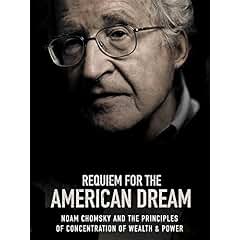
Requiem for the American Dream


The other night, looking for a documentary to watch on Netflix, we came across this one. It sounded like a provocative subject for today, and we watched it. While I have committed myself to staying off divisive partisan politics here, cultural issues are important to me-- and sometimes they stray into partisan territory. In this case, many have seen, including Sanders and Trump, how the country has gotten off kilter. When did it happen and how? Chomsky lays out his case with 10 principles. I could not find the link for it on Netflix, but it's also on Amazon to rent or buy.


The video was put together in 2015 (so it's not about Trump or Clinton but our culture and how we got here where so many American families no longer found themselves hopeful). The book came out this year. [Requiem for the American Dream in paperback]

Noam Chomsky is labeled by some as a socialist (for those who like boxes) but if you listen to his words, he's really a thinker and doesn't automatically follow any party-line-- with plenty of blame to spread around for how we got here. 

After watching the film, I went looking for more and found talks that are more current. He accurately describes how we felt when we voted for Bernie Sanders in the primary and Hillary Clinton in the main election. Not because we favored her but because she was a lesser of evils. She would not have done much to right what Chomsky says has gone wrong. 

While I am not someone who would divide up all the wealth or eliminate all borders, I do think our system has been bought and paid for with both major parties benefiting from it. When some talk about open borders, it's not them who will lose their job or see their wages go down with cheaper labor flowing in. (that might be a little partisan).

Anyway, I think it's worth watching the movie on Netflix and also the links below. I spent over an hour watching them. I especially liked one thing he said-- and I've said it in my rant-- this last campaign did not have issues debated and the media didn't bring them up. Time and again it came down to personalities. I am considering watching Requiem for an American Dream again for how so many lost their chance to live the middle class life and maybe within the discussions find a clue to what we do about it now. Once power is ceded, it's rarely returned. 

And yet, there is a ray of hope. While Trump was big money, he had no big money behind him. Sanders almost took the nomination with no big money. Both had the people, some of the same voters, who believe DC is a swamp and want it drained. [Chomsky on Bernie Sanders]

The oligarchs in the end can pay for advertising but they only get one vote-- despite Citizens United. The people can knock over the apple cart but need to think long and hard what that will mean for them. Chomsky presents some realistic explanations for how it went wrong and what can be done now for those who want a viable middle class-- it's the engine of creativity, production, and a goal the lower economic levels always could reach toward. None of us are likely to get wealthy but we can have a good life, own a home, have some vacations, raise a family-- or at least we used to be able to have those things. The goal now is to figure out how to make it still possible.

One thing I especially like about Chomsky is how he doesn't have one side he defends no matter what. He calls it as he sees it.


Chomsky said, "The most predictable aspect of Trump is unpredictability. I think it’s dangerous, very dangerous." I should add it's what Ranch Boss and I also have said all along about Trump. He's a wild card. It's uncertain what Trump'll do because he's not an ideologue who are more easily put into a box as to possible future actions.

Trump could surprise the right and the left and even (heresy to say this) become a great President that eventually ends with him being attacked by those who wanted a NeoNazi and came to realize he wasn't. He's played a risky game to get to where he is as he needed votes and to get them, some came from a very unstable element in our society. The extremes on the right and the left can be quite dangerous.


Wednesday, March 01, 2017

Disconnections


Writing about connections isn't complete until considering-- disconnections. Throughout a long lifetime, I've observed how disconnections impact our lives and expectations. They can come through death or a chosen break-- ours or someone else's.

I had my first friend disconnect from me in high school. I had no idea why, but she just quit talking to me. This was a friend where we had sleepovers and went places together. Suddenly she turned the other way when I walked up. I didn't go to her and ask why. I never even asked friends connected to us both. I accepted the outcome and thought maybe I am better off not knowing what I did-- since I had no idea. I won't say it didn't hurt my feelings. I didn't have all that many friends to not find the loss a big deal. Maybe if I'd been more secure, I'd have gone to her. I didn't and wasn't.

Today, I think about her once in awhile, as I do all I have ever called friend; but even if I came across her, unlikely as we have all moved, I wouldn't ask why. Maybe the disconnection was less significant to her life than mine. Maybe she'd not even remember it happened

When someone disconnects from us by avoidance or an outright break, is it better to know why or not?  I think better if we can fix it as in a misunderstanding. Sometimes though we can't fix it. Then it's best to be able accept that what that person did was what they needed to do for them. What I needed to do was accept it and move on with my life-- nothing wrong with a little healthy reflecting in the process

When you get to my age, a lot of connections have come and some gone, as I grew out of them, they had mutually served their purpose, or that they lost interest in me as a friend. We aren't all meant to stay connected. You know that old saw-- some friends are for a reason, some for a season, and some for a lifetime. 

Learning to let go, especially when the loss is a painful one, is one step toward maturity. Some do this easier than others. For me, especially when the rejection has been by someone I love, I like this quote as a way of releasing, "If you love something, set it free. If it comes back to you, it is yours. If it doesn't, it never was."  

Some connections return after years. I think of the mother and daughter, Debbie Reynolds and Carrie Fisher, where I guess there was ten years when they didn't talk, at Carrie's instigation. They did then reconnect and stronger than ever. That's not always how it works out.

Religion and politics can be major reasons friendships end. We left a church over realizing we disagreed with its major tenets. My surprise came when some I had called friends no longer were. They weren't angry with me but it simply no longer served their needs to connect to me. More recently, I've had online friendships end over political differences. In a heated political time like this one, not agreeing can be the end of wanting to talk.  

Organizations are another place people can end up disconnected. I feel like a political orphan today as the party to which I belonged, from the time I could vote, has moved away from me ideologically (or I changed). I no longer have a political identity, as I definitely could not join my country's other political option. I have considered changing my registration to independent, which means disconnected voter, but it would have a cost-- my state doesn't permit disconnected voters to vote in a primary.

My last thought on disconnection is when you are the one who needs to make that choice, hopefully after serious thought and not an emotional tornado, don't feel guilty. It can be the only choice for emotional and even physical health. It would be nice to tell the person why but that isn't always possible.

When you are the one left behind by others moving on, it can lead to feelings of loneliness or even rage at a system or at the person who has rejected you. That's when the following thought is the positive one-- The best revenge is a good life (using the word revenge loosely). Basically, it means learning from it and making your life good without what you lost.

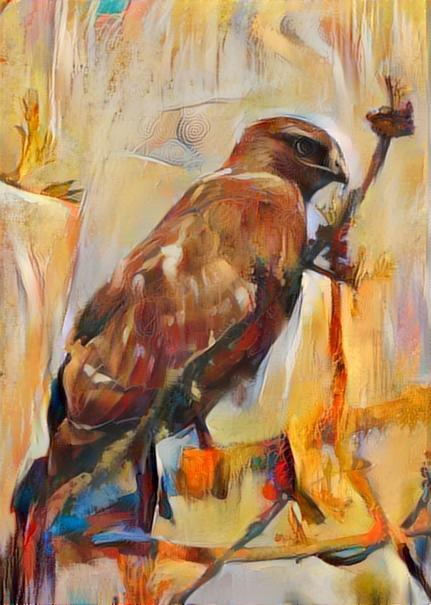
This image and the one above are from my photos and changed through a filter at Dreamscope.